Best E-commerce Platform for B2B and B2C Businesses (2026 Detailed Comparison Guide)

Choosing the best ecommerce platform for B2B or the best ecommerce platform for B2C is a strategic decision that directly impacts scalability, operations, and revenue growth. In this detailed ecommerce platform comparison, we break down Magento / Adobe Commerce, Shopify / Shopify Plus, and WooCommerce across real-world business scenarios, technical capabilities, and long-term ROI.
If you are planning B2B ecommerce website development or scaling a D2C brand, this guide will give you absolute clarity.
Magento / Adobe Commerce — Best eCommerce Platform for B2B Enterprise
Magento (Adobe Commerce) is widely recognized as the best e-commerce platform for B2B, especially for enterprises requiring customization, scalability, and operational control.
Why Magento / Adobe Commerce Leads in B2B Ecommerce
Magento is engineered for complex workflows and large-scale operations. With advanced Adobe Commerce B2B features, businesses can implement company accounts, custom pricing catalogs, purchase approvals, and bulk ordering, making it ideal for manufacturers, wholesalers, and distributors.
Unlike SaaS platforms, Magento provides complete ownership of code and infrastructure, enabling deep integrations with ERP, CRM, and PIM systems. This level of flexibility makes it the go-to choice for any serious Magento development company building enterprise-grade solutions.
From multi-store management to global expansion, Magento is built for businesses that need performance without compromise.
Magento / Adobe Commerce – Key Capabilities Table
| Capability | Details |
| B2B Features | Company accounts, custom pricing, RFQ, bulk ordering |
| Customization | Unlimited (full code access) |
| Integrations | ERP, CRM, PIM, APIs |
| Scalability | Enterprise-grade |
| Hosting | Self-hosted / Cloud |
| SEO Control | Advanced (full technical control) |
| Security | Strong (depends on implementation) |
| Ideal For | Enterprise B2B & complex B2C |
Shopify / Shopify Plus — Best eCommerce Platform for B2C Quick Launch
Shopify is the best e-commerce platform for B2C, particularly for brands that prioritize speed, simplicity, and fast time-to-market.
Why Shopify Dominates B2C Ecommerce
Shopify offers a fully hosted SaaS environment, making it extremely easy to launch and manage an e-commerce store. With Shopify Plus for small business scaling, brands can grow quickly without worrying about infrastructure, security, or maintenance.
Its ecosystem of apps and themes enables rapid deployment, while built-in tools support marketing, payments, and inventory management.
However, in the Magento vs Shopify 2026 comparison, Shopify trades flexibility for convenience. Customization beyond a certain level becomes restrictive, especially for complex business logic or B2B workflows.
Shopify / Shopify Plus – Key Capabilities Table
| Capability | Details |
| Ease of Use | Very High |
| Customization | Limited (App-based) |
| Scalability | Moderate to High |
| Hosting | Fully Managed |
| SEO Features | Good (limited technical control) |
| Security | Very Strong (managed) |
| Time to Launch | Very Fast |
| Ideal For | B2C, D2C, SMBs |
WooCommerce — Best for Micro & Small Businesses
WooCommerce is an open-source e-commerce plugin for WordPress, often used by startups and small businesses.
Where WooCommerce Fits in E-commerce Strategy
WooCommerce offers flexibility and low entry cost, making it appealing for small-scale operations. However, being fully open-source means businesses are responsible for hosting, security, performance, and maintenance.
In the WooCommerce vs Shopify debate, WooCommerce offers more control but lacks the reliability and ease of a managed platform. Security vulnerabilities and plugin dependencies can become a challenge as the business grows.
It is suitable for small businesses, but not ideal for enterprises or high-scale operations.
WooCommerce – Key Capabilities Table
| Capability | Details |
| Cost | Low initial cost |
| Customization | Moderate (plugin-based) |
| Scalability | Limited |
| Hosting | Self-managed |
| Security | Depends on setup |
| SEO | Plugin-dependent |
| Maintenance | High |
| Ideal For | Small / Micro businesses |
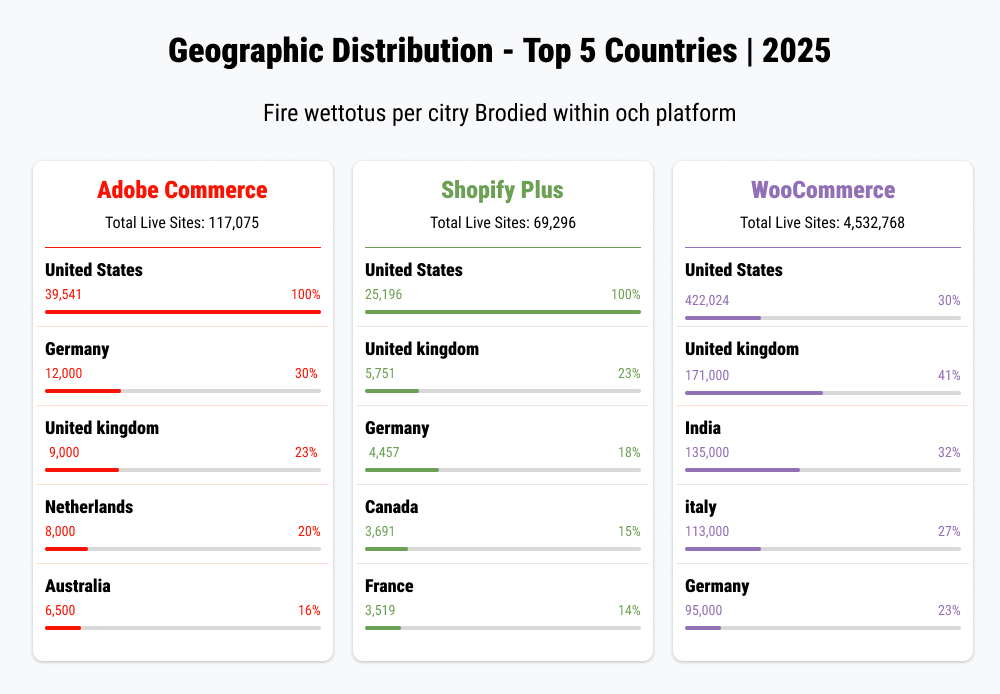
Magento vs Shopify vs WooCommerce — Full E-Commerce Platform Comparison (2026)
Core Platform Comparison
| Feature | Magento / Adobe Commerce | Shopify / Shopify Plus | WooCommerce |
| Platform Type | Open Source / Enterprise | SaaS | Open Source |
| Best Use Case | B2B & Enterprise | B2C & SMB | Small Businesses |
| Custom Workflows | Fully Flexible | Limited | Moderate |
| Multi-Store Capability | Advanced | Basic | Plugin-based |
| Performance
Optimization |
Full Control | Limited | Hosting dependent |
| Global Expansion | Strong | Moderate | Limited |
B2B Capability Comparison
| Feature | Magento / Adobe Commerce | Shopify | WooCommerce |
| Company Accounts | Yes | Limited | Plugin-based |
| Custom Pricing | Advanced | Basic | Plugin-based |
| Bulk Ordering | Native | Limited | Plugin-based |
| RFQ (Request for Quote) | Yes | No | Limited |
| Purchase Approval Workflows | Yes | No | No |
👉 This clearly positions Magento as the best e-commerce platform for B2B. Want to understand more about B2B? B2B E-Commerce Matters in 2026: Everything You Should Know
B2C Capability Comparison
| Feature | Magento | Shopify | WooCommerce |
| Quick Launch | Moderate | Very Fast | Moderate |
| Marketing Tools | Advanced | Built-in | Plugin-based |
| Checkout Experience | Customizable | Optimized | Depends |
| App Ecosystem | Moderate | Extensive | Extensive |
👉 Shopify stands out as the best e-commerce platform for B2C.
SEO & Performance Comparison
| Feature | Magento | Shopify | WooCommerce |
| Technical SEO Control | Full | Limited | Moderate |
| Page Speed Optimization | Advanced | Good | Hosting dependent |
| URL Structure Control | Full | Limited | Full |
| Schema & Markup | Fully Customizable | Limited | Plugin-based |
👉 Magento is the best e-commerce platform for SEO due to full control. Explore our E-commerce SEO Services to maximize your platform’s search performance.
Cost & Ownership Comparison
| Factor | Magento | Shopify | WooCommerce |
| Initial Cost | High | Low | Low |
| Ongoing Cost | Moderate to High | Subscription-based | Variable |
| Development Cost | High | Low to Moderate | Moderate |
| Ownership | Full | Limited | Full |
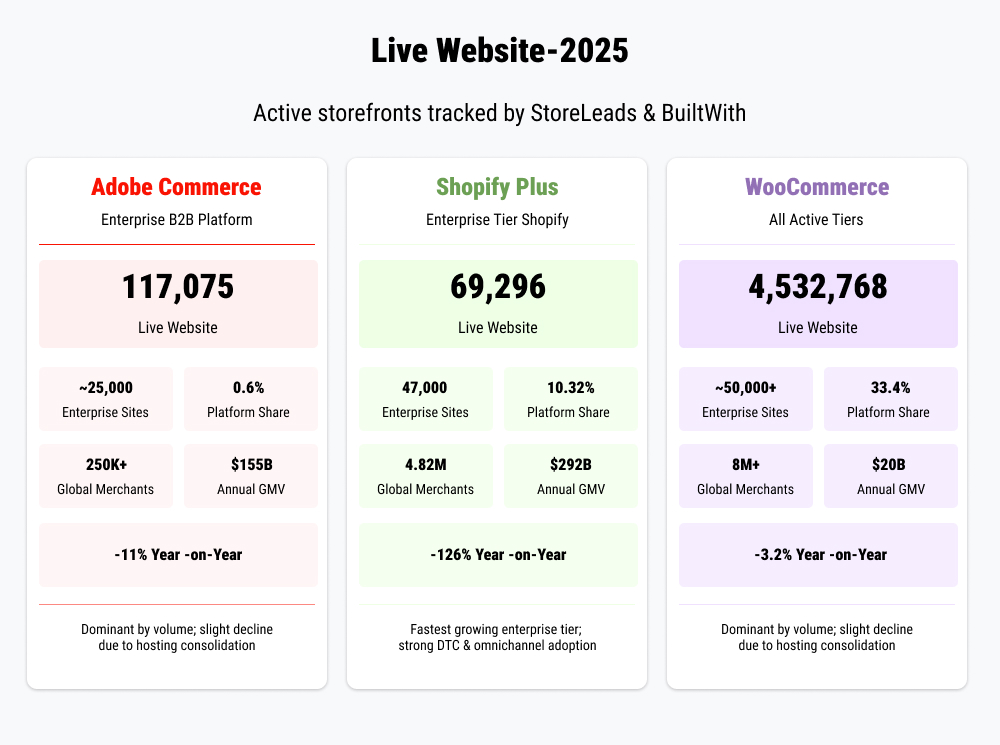
Magento vs Shopify 2026 – The Real Decision
The Magento vs Shopify 2026 debate ultimately comes down to business complexity:
- If your business requires custom workflows, B2B features, and scalability → Magento wins
- If your business needs speed, simplicity, and fast ROI → Shopify wins
WooCommerce sits as an entry-level option but lacks enterprise reliability.
How to Choose the Best E-commerce Platform for Your Business
Choose Magento / Adobe Commerce if:
You are building a scalable enterprise ecommerce solution with advanced B2B needs and long-term growth in mind.
Choose Shopify if:
You want a fast, easy-to-manage platform for B2C with minimal technical complexity.
Choose WooCommerce if:
You are starting small and need a budget-friendly option with basic functionality.
Why Viha Digital Commerce is Your Ideal E-Commerce Partner
Viha Digital Commerce specializes in delivering high-performance ecommerce solutions tailored to your business model. As a trusted Magento development company, Viha helps businesses implement Adobe Commerce B2B features, optimize Shopify stores, and build scalable digital ecosystems.
Whether you are planning B2B ecommerce website development or scaling a D2C brand, Viha ensures the right platform, the right architecture, and the right growth strategy.
FAQs
What is the best e-commerce platform for B2B?
Magento / Adobe Commerce is the best due to its advanced B2B capabilities and enterprise scalability.
What is the best e-commerce platform for B2C?
Shopify is ideal for B2C due to ease of use and quick deployment.
Which platform is best for SEO?
Magento provides the highest level of SEO control and optimization.
Is WooCommerce safe for e-commerce?
It can be safe if properly managed, but it requires continuous maintenance and security monitoring.
Final Verdict
- Magento / Adobe Commerce → Best for B2B & enterprise scalability
- Shopify / Shopify Plus → Best for B2C & rapid growth
- WooCommerce → Best for small, low-budget setups
The smartest move is not choosing the most popular platform, but choosing the one aligned with your business model, growth stage, and operational complexity.