
AI Innovation Series: AI Virtual Try-On for Fashion eCommerce
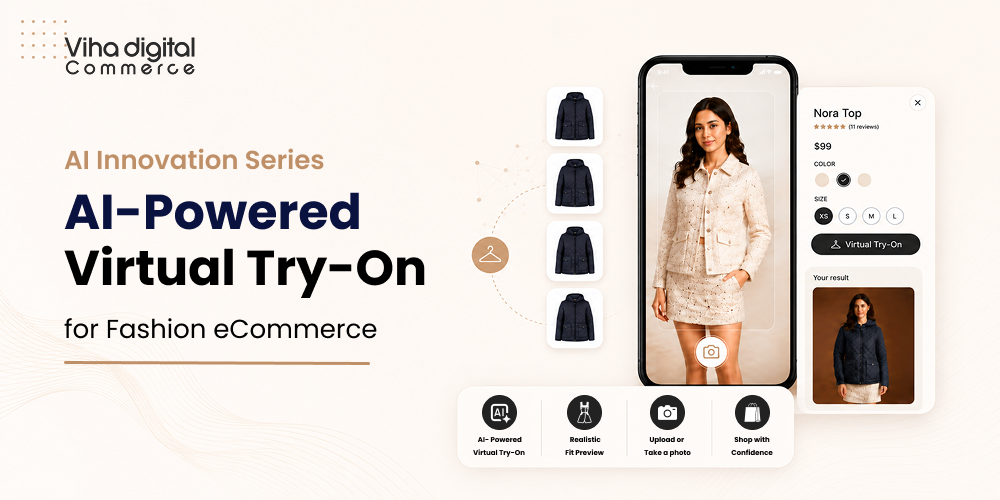
How AI Virtual Try-On Boosts Fashion eCommerce
AI Innovation Series — Episode 2
Online shoppers all ask the same question before buying clothes: “Will this actually look good on me?” A product photo only shows an outfit on one model, in one pose, under studio lighting. It doesn’t reflect your body shape, skin tone, or how the clothing might look in everyday life. That’s why many shoppers hesitate to buy, and why fashion brands are increasingly adopting AI Virtual Try-On to help customers see a more personalized preview before making a purchase. If you’re wondering how AI Virtual Try-On works, you’ll see why it’s quickly becoming a must-have feature for online fashion stores.
Welcome to Episode 2 of our AI Innovation Series, where Viha Digital Commerce explores practical AI solutions that help eCommerce businesses improve customer experience and drive more sales. In Episode 1, we discussed AI-powered product recommendations. This time, we’re focusing on AI Virtual Try-On—how it works, the benefits it brings to fashion brands, and why it’s helping reduce returns while giving shoppers more confidence to buy online.
What Is AI Virtual Try-On for the Fashion Industry?
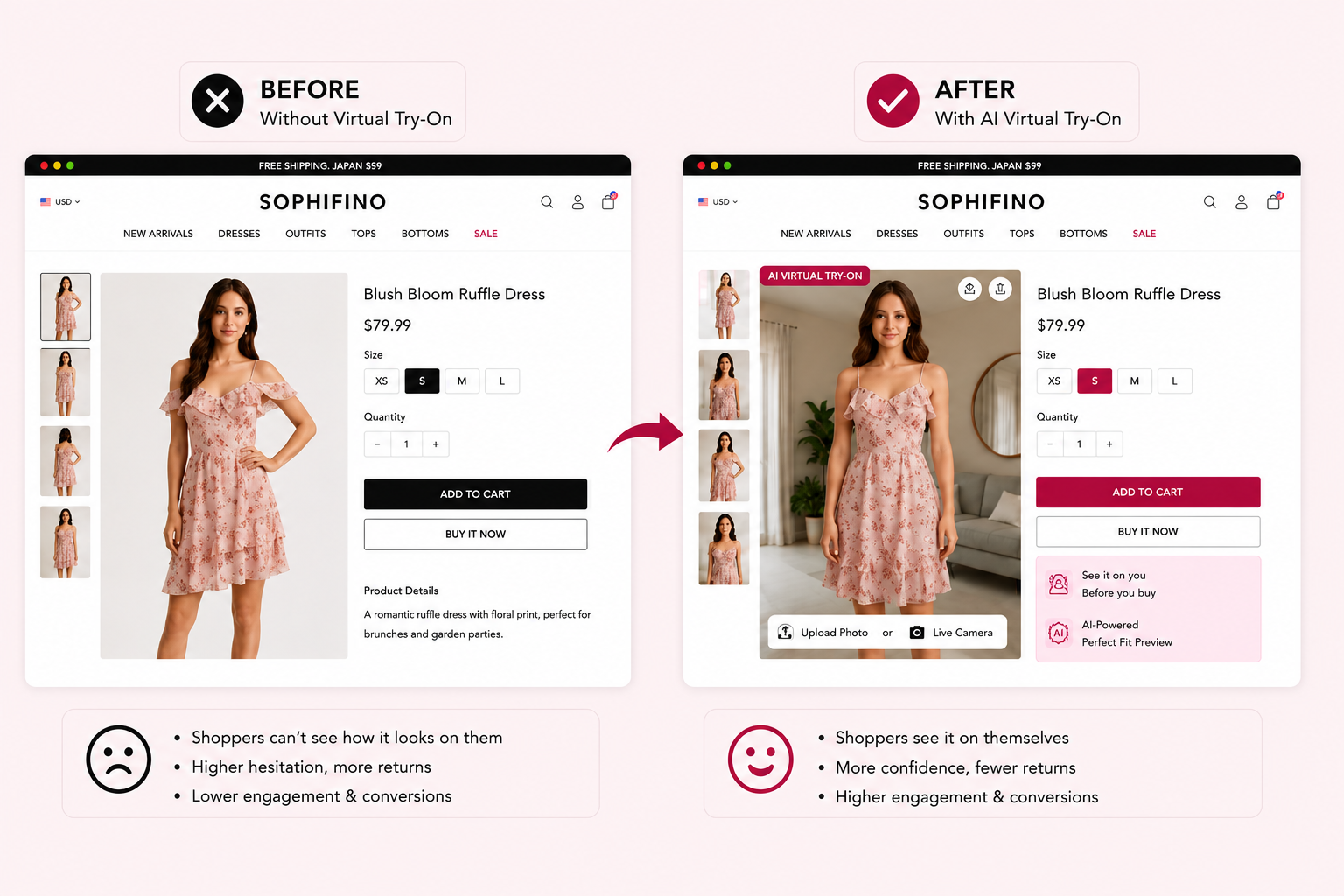
AI Virtual Try-On is a feature that lets a shopper see a garment on their own body, digitally, before they buy it. Instead of relying on a flat catalog image, the customer uploads a photo or captures one instantly with their device’s camera, and the system generates a realistic image of them wearing the selected outfit.
This is often called a virtual fitting room, and it broadly covers two use cases that many brands now combine:
- Customer-facing try-on — the shopper sees the outfit on their own photo or a live camera feed, directly on the product page.
- AI outfit visualization for brand content- the store uses AI-generated models to showcase products across different body types without booking a full photoshoot.
Both solve the same underlying problem: static photography cannot answer “will this actually look good on me?” and that unanswered question is where most hesitation, and most abandoned carts, come from.
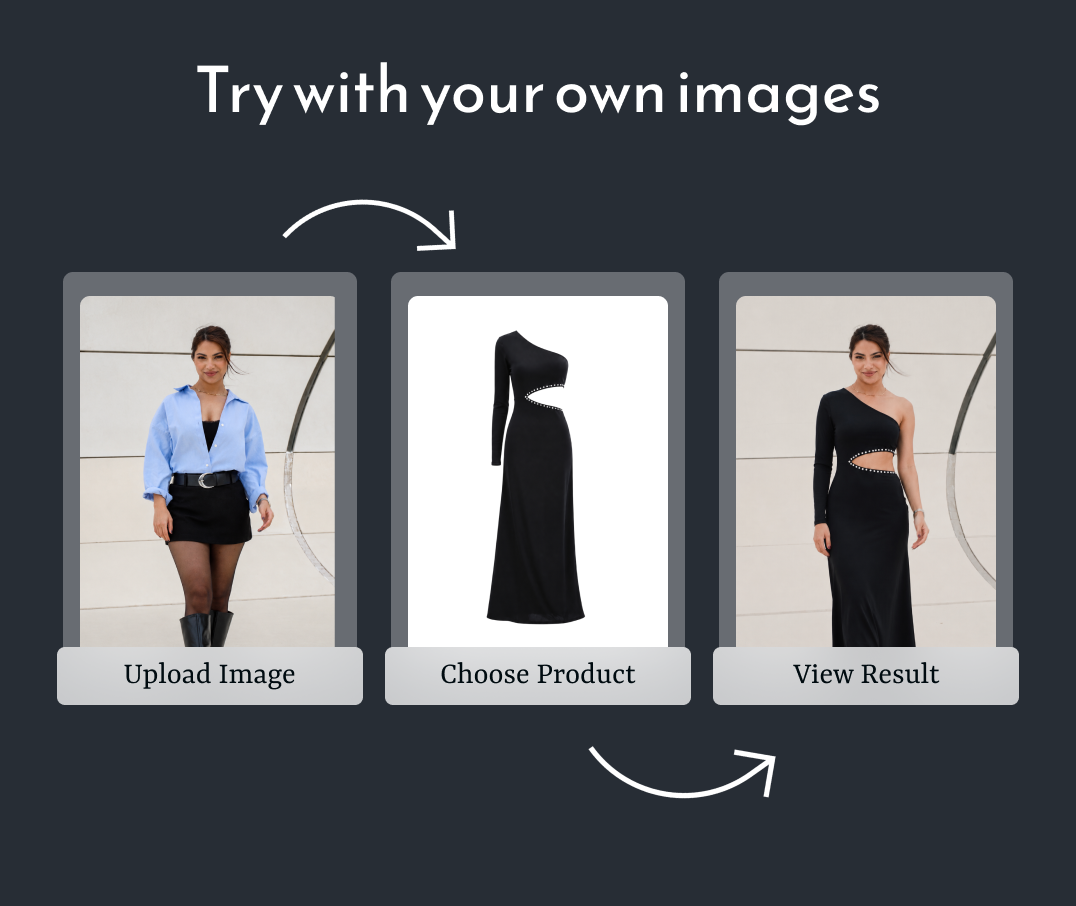
How It Works, in Three Steps
The experience is built to be simple enough that a customer never notices the technology behind it.
1. Upload or capture a photo. The shopper either picks an existing photo or takes one instantly using their phone or laptop camera, no app download required.
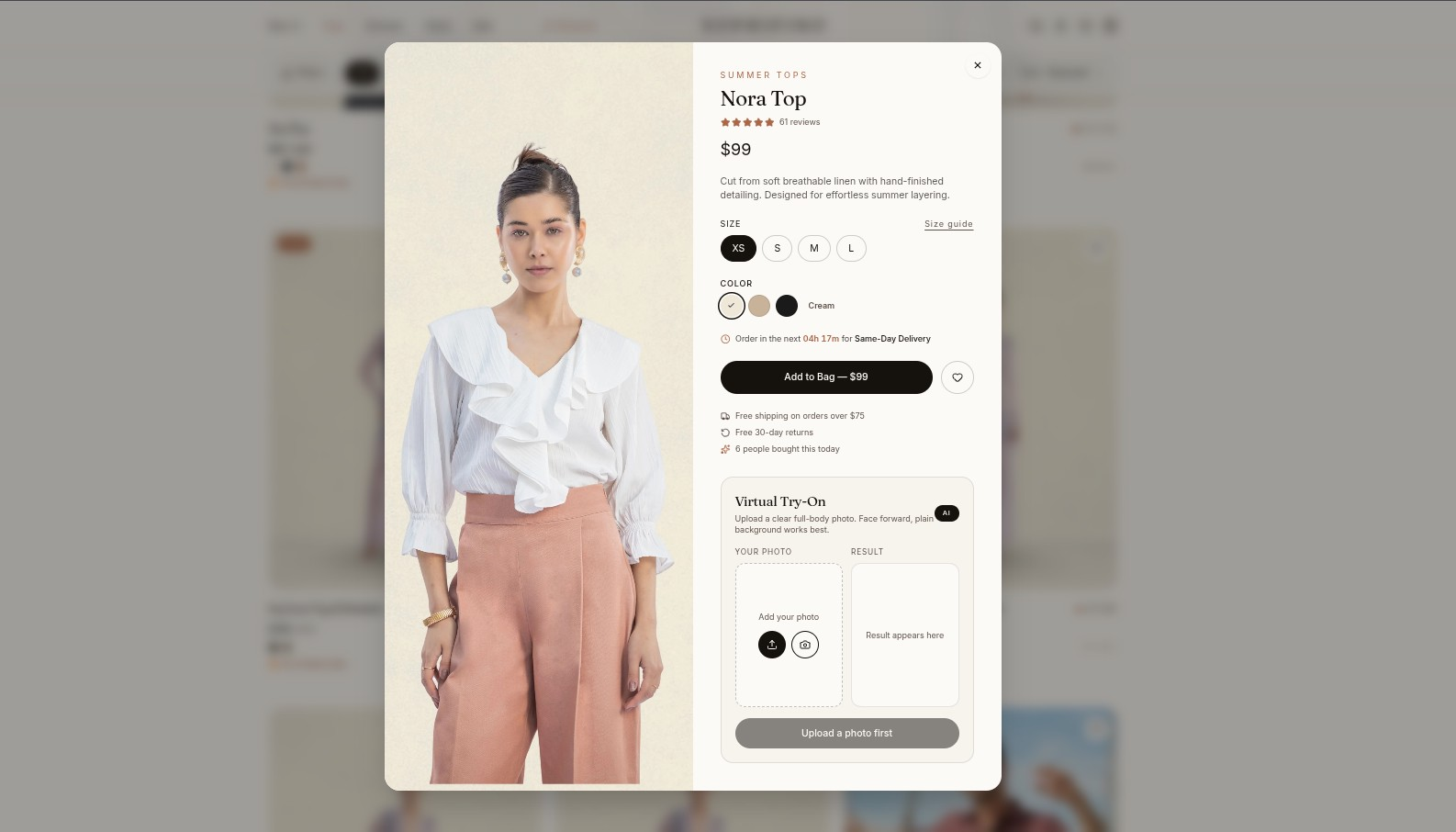
2. The AI processes body and garment together. The system reads body positioning, proportions, and lighting, then maps the selected outfit onto that image so the fabric follows the body naturally rather than looking pasted on.
3. The shopper sees the result and decides. A realistic preview appears in seconds, right on the product page, so the customer can compare, adjust, or move straight to checkout.
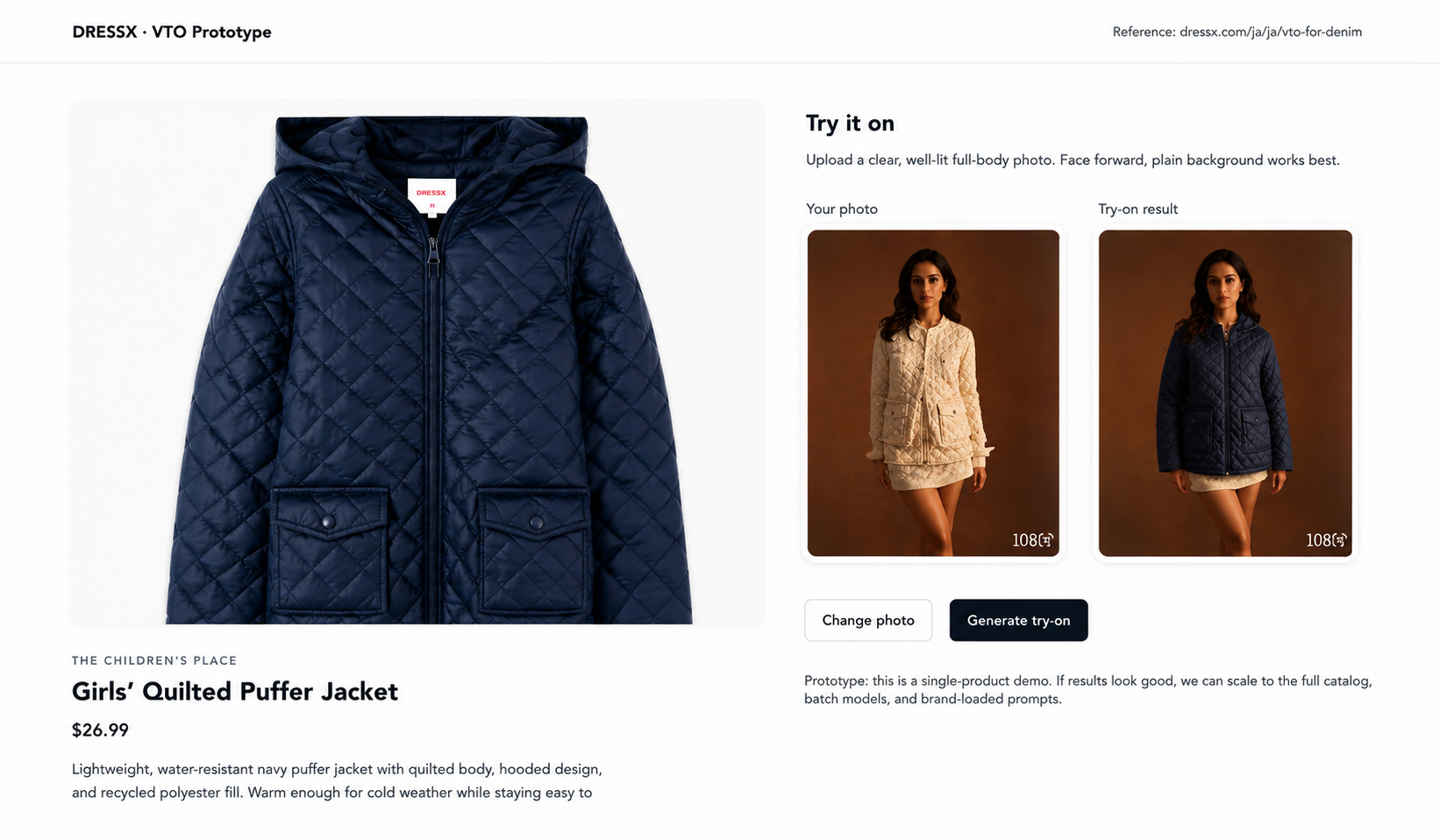
That simplicity is the point. The more friction a virtual fitting room adds, the less shoppers use it, so the best implementations feel like a natural extension of browsing, not a separate tool.
Why Fashion Brands Are Adding This Now
The benefits of virtual try-on for eCommerce stores show up in the numbers that matter most to a fashion brand, not just in the novelty of the feature itself. Brands that increase conversion rate with virtual try-on don’t do it through gimmicks — they do it by removing hesitation at the exact moment a shopper is deciding to buy.
- Higher conversion rates: When a shopper can see themselves in an item, the decision to buy happens faster because the biggest source of hesitation — uncertainty — is already resolved.
- Fewer returns: A large share of fashion returns happen because the item looked different in person than expected. A realistic preview closes that gap before the order ships, not after.
- Stronger engagement: Shoppers spend more time exploring a catalog when they can preview items interactively, which tends to increase the number of products viewed per session.
- A more modern brand experience: Offering AI-powered try-on signals that a brand is investing in customer experience, which matters for differentiation in a crowded fashion eCommerce market.
What Does It Cost to Add Virtual Try-On to Your Store?
This is usually the first practical question once a brand is convinced of the value. The honest answer is that the cost of the AR try-on feature for eCommerce varies by scope, and any vendor quoting a flat number without first asking about your store is skipping steps that actually determine the price.
A few factors drive the cost of virtual try-on technology for online stores:
- Integration depth — a simple “try on” button connected to an existing product catalog costs less than a fully custom fitting-room experience with saved looks and account history.
- Platform — Shopify integrations and Adobe Commerce (Magento) integrations require different technical approaches, and existing store architecture affects development time.
- Volume and hosting — image generation at scale carries ongoing processing costs, which factor into pricing beyond the initial build.
- Custom features — real-time camera try-on, size recommendations, and brand-specific styling all add scope.
Rather than guessing at the price of virtual try-on software for online stores from a generic quote, most brands get a clearer answer from a short technical scoping call against their own store and catalog.
Where It Fits: Shopify and Adobe Commerce
One of the biggest concerns for online store owners is whether adding AI Virtual Try-On means redesigning or rebuilding their website. The good news is that it doesn’t. The feature can be integrated directly into existing product pages on Shopify or Adobe Commerce, allowing customers to experience virtual try-on without disrupting your store’s design or checkout process. If you’re planning to add AI Virtual Try-On to your Shopify or Adobe Commerce store, the process is much simpler than most businesses expect.
If you don’t have an in-house development team, partnering with an experienced AI Virtual Try-On integration agency can make the implementation faster and more reliable. Instead of rebuilding your store, experts evaluate your existing product catalog, theme, and customer journey to ensure the new feature works seamlessly with what you already have. Learn how our AI integration services help fashion brands implement AI Virtual Try-On with minimal disruption and maximum impact.
Being Honest About What It Can’t Do Yet
Virtual try-on is a strong visual preview, not a replacement for a size chart. It’s worth saying plainly: the technology shows how an item is likely to look, not the exact fit or fabric feel, and heavily layered or highly detailed garments are still harder for any AI model to render convincingly than a simple top or dress. Brands that pair virtual try-on with clear sizing information, rather than positioning it as a complete substitute for measurements, tend to see the best results and the fewest support tickets.
See AI Virtual Try-On on Your Own Store
Viha Digital Commerce has built an AI Virtual Try-On feature that fashion brands can add to their existing Shopify or Adobe Commerce store without a rebuild. It’s designed to do exactly what customers want: help them shop with more confidence, and help stores convert more of that confidence into completed orders.
Frequently Asked Questions
1. How much does virtual try-on technology cost for an online store?
It depends on integration depth, platform, and features like real-time camera capture. Most brands get an accurate number from a short scoping call rather than a generic quote.
2. Can virtual try-on be added without rebuilding my store?
Yes. It integrates into an existing Shopify or Adobe Commerce product page without requiring a platform migration or rebuild.
3. Does virtual try-on actually reduce returns?
It reduces returns caused by appearance and fit mismatch specifically, since customers have already seen a realistic preview before ordering. It doesn’t replace accurate sizing information.






 All-in-One Solution
 Customizable Services
 Assortment of Payment Options
 Optimized Sales Processes
 Omnichannel Maintenance & Support
 Custom Shopping Cart
 Advanced Security & Support
 API Payment & Logistic Integrations
 Social Media Integration