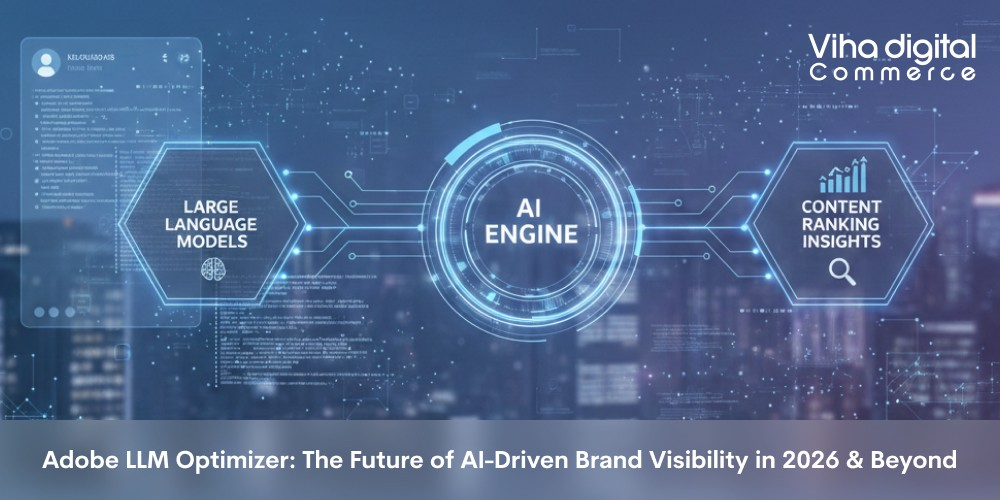
Adobe LLM Optimizer: The Future of AI-Driven Brand Visibility in 2026 & Beyond
AI has shifted the digital landscape faster than most brands expected — and search is no exception. In 2026, consumers increasingly rely on generative AI systems like ChatGPT, Gemini, and other conversation-centric interfaces to discover information, make decisions, and even research products. This isn’t a trend — it’s a tectonic shift in how content is found and trusted.
That’s where Adobe LLM Optimizer enters the picture — a new enterprise solution built to make brands visible, relevant, and influential across AI-powered search and discovery ecosystems. For forward-thinking brands and eCommerce stores — especially those powered by platforms like Magento — understanding and leveraging Adobe’s LLM-centric optimization strategy is no longer optional — it’s essential to maintain visibility and competitive advantage.
AI Search Is Replacing Traditional SEO — Here’s Why It Matters
Traditional search engines have dominated digital strategy for decades. But as early as 2025, data showed that AI-generated responses and conversational agents were influencing more than 80% of consumer search interactions, with generative AI platforms pulling users away from organic search links into direct AI answers and summaries.
This trend means that:
- Users often get answers directly from AI without clicking traditional search results.
- Websites risk losing qualified traffic if they aren’t optimized for large language model (LLM) visibility.
- Brands must now think beyond keywords — to AI context, authority, and citation.
For Magento-powered eCommerce stores, this creates both a challenge and a massive opportunity. If your store content isn’t optimized for how AI systems read and cite data, you could be missing out on a new wave of discovery traffic and purchase intent — even if your SEO rankings look strong.
What Is Adobe LLM Optimizer?
Adobe LLM Optimizer is an enterprise-grade AI search and generative discovery optimization platform. Its goal? To help brands shape how they show up, are referenced, and are trusted across AI-powered search interfaces — which are rapidly becoming primary discovery channels for online buyers.
At its core, Adobe LLM Optimizer:
- Tracks where and how brands appear in AI search and generative discovery.
- Measures AI-driven visibility across multiple large language models (LLMs).
- Provides actionable recommendations to improve discoverability and relevance.
- Helps brands deploy optimized content quickly, often with integrations into systems like Adobe Experience Manager.
In contrast to traditional SEO tools — which largely focus on keywords, backlinks, and ranking signals — LLM Optimizer is designed to make content AI-ready and AI-friendly, enabling businesses to appear as references in AI responses that users depend on.
How Adobe LLM Optimizer Works — Simplified
Adobe LLM Optimizer operates through a three-step process that blends insight with action:
1. Auto-Identify Opportunities
The platform continuously analyzes AI interactions to detect where your content is already being cited — or where it should be. This gives a clearer picture of AI search share-of-voice and where your visibility gaps lie.
2. Auto-Suggest Optimizations
Built-in machine learning models offer prescriptive recommendations — from technical fixes to content adjustments — that help increase relevance and AI-readiness. These suggestions are based on attributes prioritized by LLMs, not just traditional SEO.
3. Auto-Optimize With Deployment Tools
With seamless integrations (like Adobe Experience Manager Sites) or APIs for custom systems, these optimizations can go live with one click — making AI-friendly optimization faster and more efficient.
This blend of insight + execution is what separates LLM Optimizer from older, reactive SEO tools — giving marketers the ability to lead the AI-search narrative rather than chase it.
Why AI Search Optimization Is Critical for eCommerce in 2026
The era of click-through links is being overtaken by AI-provided answers. According to industry research, organic search traffic could shrink by more than 50% by 2028 as users increasingly trust AI-generated responses. For eCommerce stores, that’s potentially a dramatic shift in how buyers discover products and brands online.
For Magento merchants and brands working with expert agencies like Viha Digital Commerce — an Adobe Commerce Agency and Magento Ecommerce Development Company — this means rethinking visibility strategies with AI in mind.
AI Visibility = New Discovery Channels
Instead of relying only on search engine rankings, brands must now optimize their content for:
- Citations in AI responses
- Informational snippets used by large language models
- Structured content that AI systems trust and reference
- Metadata that aligns with generative context rather than just keywords
If your store’s product descriptions, category content, or brand narratives aren’t AI-structured and AI-interpretable, LLMs might ignore your pages — even if they rank well traditionally.
Benefits for Shopify, Magento & Enterprise Stores
Whether you’re scaling a Magento 2 store or managing a multi-region enterprise setup, the advantages of adopting AI search optimization early are substantial:
Higher Visibility in AI Interfaces
Adobe LLM Optimizer helps identify where your brand is already visible to AI — and where it should be. This allows you to strategically improve high-impact pages and products.
Actionable, Prescriptive Optimization
Rather than guessing what works, the platform suggests precise actions — from fixing issues to building authoritative content around key discovery topics.
Business-Level Reporting
With built-in reporting, you can connect AI discovery metrics to engagement and conversion KPIs — making it easier to prove ROI internally.
Fast Deployment and Implementation
Whether through one-click publishing with Adobe Experience Manager or API-based pushes to custom CMS solutions, optimization changes can go live quickly.
What Magento Store Owners Should Focus On Next
As Magento Web Development Services evolve, AI visibility should become a strategic pillar — not an afterthought.
Here’s how smart brands can start:
1. Plan for AI-Ready Content
This means structuring product content in ways LLMs understand — not just humans. Clear, concise answers, structured FAQs, and well-tagged metadata all help.
2. Integrate with Enterprise Content Tools
If you use robust CMS platforms (including Adobe Experience Manager), adding tools like LLM Optimizer can significantly accelerate content performance in AI channels.
3. Benchmark & Monitor AI Traffic
Traditional analytics don’t fully show AI-driven discovery. Understanding where conversation engines cite your content will redefine how you measure visibility.
4. Partner With Experts
Working with a Magento Web Development Company that understands AI search optimization — including tools like LLM Optimizer — ensures your content isn’t just optimized for Google, but also for next-gen AI channels.
Conclusion: The Next Frontier of Brand Discovery
In 2026, generative AI isn’t just an experimental channel — it’s a primary discovery engine. Tools like Adobe LLM Optimizer empower brands to take control of how they appear in AI search responses, drive qualified AI-driven traffic, and demonstrate real business impact.
For eCommerce leaders and Magento merchants, the message is clear: don’t wait for AI search to become mainstream — optimize for it now. After all, visibility in AI discovery channels will shape brand authority and performance in the years ahead — and becoming AI-ready today is the strategic edge your business needs in 2026 and beyond.