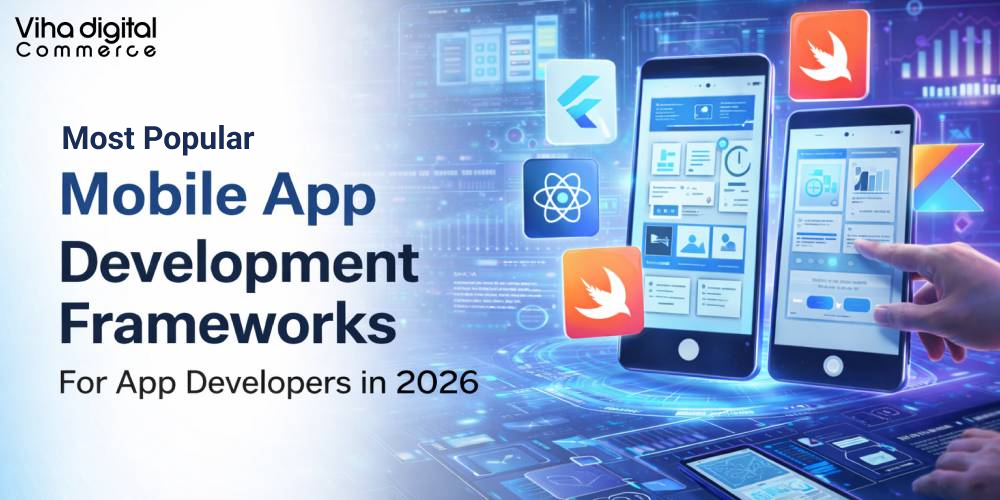
Most Popular Mobile App Development Frameworks for App Developers in 2026
Mobile apps are no longer just “digital products” – they are the backbone of modern business growth. From ecommerce platforms and fintech to healthcare and enterprise automation, mobile-first experiences dominate customer expectations in 2026.
For any mobile app development company, staying ahead means choosing the right frameworks that deliver speed, scalability, performance, and future-ready user experiences.
With new tools emerging rapidly, mobile app developers need frameworks that support cross-platform efficiency, enterprise-grade security, and seamless UI performance.
In this guide, we explore the most popular mobile app development frameworks in 2026, compare native vs hybrid vs cross-platform development, and help businesses choose the best path for success.
Types of Mobile App Frameworks in 2026
Before diving into the top frameworks, it’s important to understand the three major categories shaping app development today:
1. Native Frameworks
Native development refers to building mobile applications specifically for a single platform, such as Android using Kotlin or Java and iOS using Swift or Objective-C. This approach allows developers to fully leverage platform-specific capabilities, APIs, and hardware features. As a result, native frameworks deliver superior performance, enhanced security, smoother user experiences, and complete access to device functionalities, making them ideal for performance-critical and feature-rich applications.
2. Hybrid Frameworks
Hybrid apps are built using web technologies like HTML, CSS, and JavaScript, wrapped inside a native container.
They are faster to develop but may compromise performance.
3. Cross-Platform Frameworks
Cross-platform frameworks allow developers to build apps for both Android and iOS using a single codebase.
This approach dominates custom mobile app development in 2026 because it reduces cost and accelerates launch timelines.
Native vs Hybrid vs Cross-Platform App Development
Choosing between native, hybrid, and cross-platform depends on business goals.
Native App Development
Best for:
Native app development is ideal for high-performance applications, including gaming apps, AR/VR experiences, and complex enterprise solutions that require maximum stability, security, and device-level optimization.
Pros:
Native apps deliver exceptional speed and responsiveness by fully leveraging platform-specific capabilities. They provide complete access to device hardware and APIs, enabling advanced features and superior performance. Additionally, native development ensures consistent UI/UX standards that align perfectly with iOS and Android design guidelines.
Cons:
The development process often involves higher costs and longer timelines, as separate applications must be built for iOS and Android. Managing multiple codebases also increases maintenance effort compared to cross-platform development approaches.
Hybrid App Development
Best for:
Hybrid app development is best suited for simple applications, MVPs, and early-stage prototypes, especially for businesses working with limited budgets or tight timelines.
Pros:
This approach enables faster development cycles by using a single codebase across platforms, significantly reducing overall development costs. Hybrid apps are also easier to maintain and ideal for quickly validating business ideas.
Cons:
Hybrid applications may face performance constraints, particularly for complex or resource-intensive use cases. They also tend to offer a less native-like user experience compared to fully native or modern cross-platform solutions.
Cross-Platform Development
Best for:
Cross-platform app development is ideal for modern startups, eCommerce platforms, and service-based applications that prioritize scalability and faster market entry.
Pros:
Using a single codebase across multiple platforms significantly reduces development time and costs. This approach enables faster deployment, easier updates, and benefits from strong community and ecosystem support, especially with frameworks like Flutter and React Native.
Cons:
While cross-platform frameworks are highly capable, certain use cases may still require platform-specific customizations to fully optimize performance or access advanced native features.
Most mobile app development agencies in 2026 now prioritize cross-platform frameworks for speed-to-market advantages.
List of Most Popular Mobile App Development Frameworks in 2026
Let’s explore the frameworks leading the industry this year.
1. Flutter (Google)
Flutter remains one of the most dominant frameworks in 2026 for cross-platform development.
It uses Dart and delivers stunning UI performance with near-native speed.
Why Flutter is Popular
- Single codebase for Android, iOS, Web, Desktop
- Highly customizable UI widgets
- Excellent performance for ecommerce and enterprise apps
Flutter is widely used by top mobile app development companies because it supports scalable and visually rich experiences.
Best for:
- Ecommerce apps
- Fintech platforms
- Enterprise dashboards
2. React Native (Meta)
React Native continues to be a top choice for developers already skilled in JavaScript and React.
It powers apps like Instagram, Shopify, and many global startups.
Key Benefits
- Large developer ecosystem
- Fast development cycles
- Strong third-party plugin support
React Native is ideal for businesses looking to hire mobile app developers quickly due to its widespread adoption.
Best for:
- Social apps
- Marketplace platforms
- Business automation tools
3. Kotlin Multiplatform Mobile (KMM)
KMM is rapidly growing in enterprise environments because it allows shared business logic while keeping native UI.
Why Enterprises Love KMM
- Native performance
- Shared code for backend logic
- Best of both worlds: cross-platform + native UI
For enterprise-grade apps, KMM is becoming a top framework for mobile app development service providers.
Best for:
- Banking apps
- Healthcare platforms
- Large-scale enterprise apps
4. SwiftUI (Apple)
SwiftUI is Apple’s modern native UI framework and a major player for iOS-first development in 2026.
Advantages
- Smooth animations and UI performance
- Native Apple ecosystem integration
- Faster iOS development cycles
Native frameworks like SwiftUI remain critical for premium apps requiring maximum performance.
Best for:
- iOS-exclusive products
- Apple ecosystem apps
- High-end consumer applications
5. Jetpack Compose (Android)
Jetpack Compose is now the standard for Android UI development.
It simplifies Android app building with declarative UI components.
Why Jetpack Compose Matters
- Modern Android-native approach
- Cleaner code structure
- Faster UI development
Top mobile app development companies in India teams frequently use Compose for Android-native enterprise apps.
Best for:
- Android-first enterprise solutions
- Utility and productivity apps
6. Ionic Framework
Ionic remains relevant for hybrid app development, especially for startups building lightweight apps quickly.
Key Features
- Uses HTML, CSS, JavaScript
- Works well for MVP launches
- Strong plugin ecosystem
Best for:
- Prototype apps
- Budget-focused business apps
Best Framework for Enterprise Mobile App Development in 2026
Enterprise applications demand a robust foundation that supports seamless scalability, enterprise-grade security, and consistently high performance under heavy workloads. In addition, they must integrate smoothly with existing and legacy systems to ensure operational continuity, data synchronization, and long-term business efficiency.
Top Enterprise Framework Choices
Flutter is widely used for building scalable, UI-heavy enterprise applications, offering a consistent design and fast performance across platforms. Kotlin Multiplatform enables businesses to achieve native-grade enterprise performance while sharing core logic across platforms.
React Native is ideal for rapid business solution development, helping companies reduce time-to-market without compromising user experience. For mission-critical applications, native development using Swift for iOS and Kotlin for Android remains the preferred choice due to its unmatched performance, security, and full access to platform-specific features.
Enterprise-focused mobile app development services often combine frameworks depending on business needs.
How to Choose the Right Framework in 2026
Choosing the right mobile app development framework in 2026 depends on multiple technology trends and their business impact. The right decision can directly influence scalability, performance, cost, and time-to-market.
1. Business Goals
Are you building an MVP, an eCommerce application, or an enterprise-grade platform? Current mobile app development trends & business impact show that flexible frameworks help businesses scale faster.
2. Platform Requirements
Do you need Android and iOS apps together, or are you launching on a single platform first? Cross-platform trends are driving faster go-to-market strategies.
3. Budget and Timeline
Cross-platform frameworks reduce development costs and accelerate launches, creating a positive business impact for startups and growing enterprises.
4.Performance Needs
High-performance use cases like gaming, AR/VR, and fintech apps often require native frameworks to meet evolving performance trends and business demands.
5.Developer Availability
Frameworks such as React Native and Flutter align with global hiring trends, making it easier to find skilled mobile app developers and maintain long-term efficiency.
A trusted mobile app development agency evaluates both trends & business impact to recommend the right framework for long-term growth and scalability.
Popular Examples of Native App Frameworks
Native development remains crucial in high-performance environments.
iOS Native Frameworks
- SwiftUI
- UIKit
- Combine
Android Native Frameworks
- Jetpack Compose
- Android SDK
- Kotlin Coroutines
Native frameworks offer unmatched optimization for hardware-intensive applications.
Why is India the Global Leader in Mobile App Development in 2026?
India has emerged as the world’s most trusted hub for app development.
Here’s why:
Massive Talent Pool
India produces millions of skilled engineers annually, making it easier to find experienced mobile app developers.
Cost-Effective Development
Businesses worldwide choose a mobile app development company in India for high-quality solutions at competitive pricing.
Expertise Across Frameworks
Indian teams specialize in:
- Flutter
- React Native
- Native iOS/Android
- Enterprise mobile systems
Strong Global Delivery Standards
Top Indian mobile app development companies follow international compliance, agile development, and scalable architecture practices.
This is why India continues to dominate global custom mobile app development in 2026.
Conclusion: The Future of Mobile App Frameworks in 2026
The mobile development ecosystem in 2026 is defined by speed, cross-platform efficiency, and enterprise scalability. Frameworks like Flutter, React Native, Kotlin Multiplatform, and native technologies such as SwiftUI and Jetpack Compose are shaping the future of app innovation. For businesses aiming to build high-performance mobile applications, choosing the right framework and the right development partner is critical. Viha Digital Commerce delivers end-to-end mobile app development services, enabling brands to build secure, scalable, and performance-driven apps using modern technologies. Whether you’re a startup or an enterprise, Viha Digital Commerce stands out as a trusted custom mobile app development company focused on delivering measurable business results.
Ready to build your next app?
Partner with the best mobile app development company for future-ready digital success.










 All-in-One Solution
 Customizable Services
 Assortment of Payment Options
 Optimized Sales Processes
 Omnichannel Maintenance & Support
 Custom Shopping Cart
 Advanced Security & Support
 API Payment & Logistic Integrations
 Social Media Integration
 Professional Communication
 Skilled Developers
 Timing is Everything
 Secure Agreements
 Support Tilt
 Quality Top Up Most
 White Development Pathway
 Competitive Price Point